
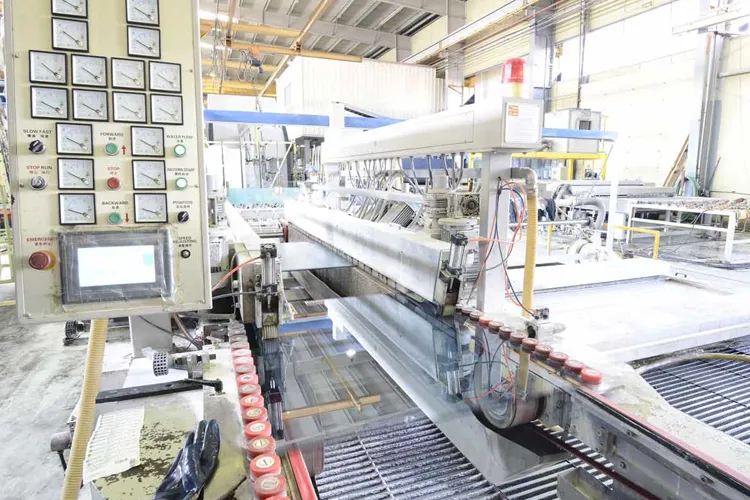
Toughened / Tempered Glass
Toughened tempered glass, also known as safety glass, is one of the most versatile and widely used glass products in modern construction and manufacturing. Through a specialized heat-treatment process, tempered glass becomes four to five times stronger than standard annealed glass of the same thickness, making it highly resistant to impact, thermal stress, and everyday wear.
One of the key safety advantages of tempered glass is the way it breaks. Unlike ordinary glass, which shatters into large, sharp pieces, toughened tempered glass fractures into small, blunt-edged fragments that significantly reduce the risk of serious injury. This safety feature makes it the preferred choice for residential, commercial, and industrial applications where human safety is a priority.
Tempered glass is extensively used in automobile windows, where it helps protect passengers by reducing the risk of injury during an accident. It is also commonly found throughout homes and commercial buildings in areas exposed to heat or frequent use, including shower enclosures, glass partitions, doors, windows, stair railings, balustrades, tabletops, kitchen countertops, ovens, stovetops, display cabinets, and office glass systems.
Because of its exceptional strength and durability, toughened tempered glass is suitable for a wide range of demanding applications, including:
- High-pressure and high-rise windows
- Glass doors and entrances
- Lighting products and fixtures
- Explosion-resistant windows
- Display showcases
- Glass partitions and office walls
- Shower glass enclosures
- Glass railings and balustrades
- Storefront glazing
- Commercial and residential architectural projects
Glass Tempering Process
The strength of toughened tempered glass comes from a carefully controlled tempering process. First, the glass is cut, polished, and fabricated to its final dimensions, as it cannot be modified after tempering. It is then placed inside a high-temperature tempering furnace and heated to approximately 620°C (1,150–1,200°F).
Once the required temperature is reached, the glass undergoes a rapid cooling process known as quenching. During quenching, multiple high-pressure air nozzles blast cool air across both surfaces of the glass for several seconds. This process compresses the outer surfaces while creating tension within the core of the glass.
The resulting stress pattern increases the glass’s mechanical strength by three to five times compared to ordinary annealed glass. It also improves impact resistance and enables the glass to withstand sudden temperature changes of up to 200°C, making it ideal for demanding environments.
Benefits of Toughened Tempered Glass
- Up to five times stronger than ordinary glass
- Breaks into small, safer fragments upon impact
- Excellent resistance to thermal shock
- High impact and bending strength
- Crystal-clear transparency
- Long-lasting durability
- Low maintenance
- Suitable for residential, commercial, and industrial use
- Complies with international safety standards
Whether used in modern homes, office buildings, retail stores, hotels, or industrial facilities, toughened tempered glass offers the perfect combination of safety, strength, durability, and elegant design. Its superior performance makes it one of the most trusted glazing materials for architects, builders, and property owners looking for reliable and long-lasting glass solutions.
